

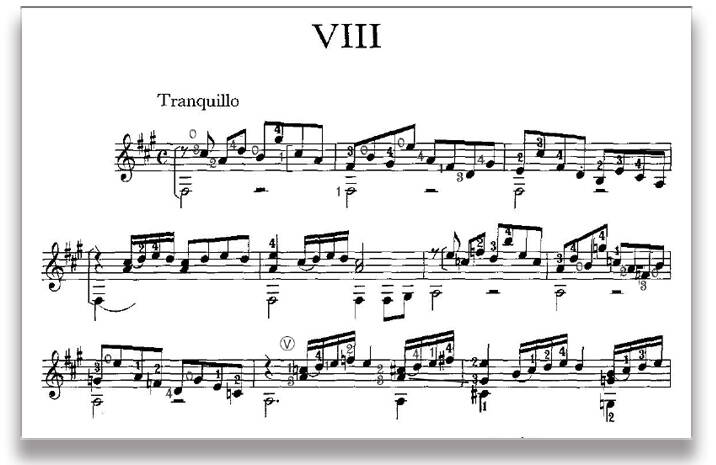
AI: Manuel Ponce’s Prelude No. 8 (in F-sharp minor), often marked Tranquillo, is highly praised by the classical guitar community for its beautiful, mysterious, and lyrical qualities. Because Ponce primarily composed at the piano, guitarists frequently comment on the piece's awkward, challenging fingerings but admire its breathtaking ascending bass line. [1, 2, 3, 4]
Key Commentary & Thoughts from the Guitar Community
-
Lyrical Beauty & Mood: Listeners and performers describe the piece as "mysterious and gorgeous," possessing a rich, self-contained character. Many consider it to be one of Ponce’s finest and most emotionally resonant miniatures. [1, 2, 3]
-
The "Tranquillo" Feel: The Tranquillo marking invites a slow, deeply expressive performance. Some guitarists deliberately slow the tempo even further to allow the listener to hear all of Ponce's complex voice-leading and rich harmony. [1, 2]
-
Technical Challenges: Because it was transcribed from the piano, guitarists note that maintaining all independent voices and large barred stretches in the development section is incredibly difficult. Performers like Christopher Rude have commented that many guitarists (and even Andrés Segovia himself) occasionally abandoned trying to play every single written voice in this section out of technical necessity. [1]
-
Segovia's Legacy: This prelude holds special historical significance as it was chosen by Andrés Segovia as the #1 piece in his published selection of twelve Ponce preludes. [1, 2]