

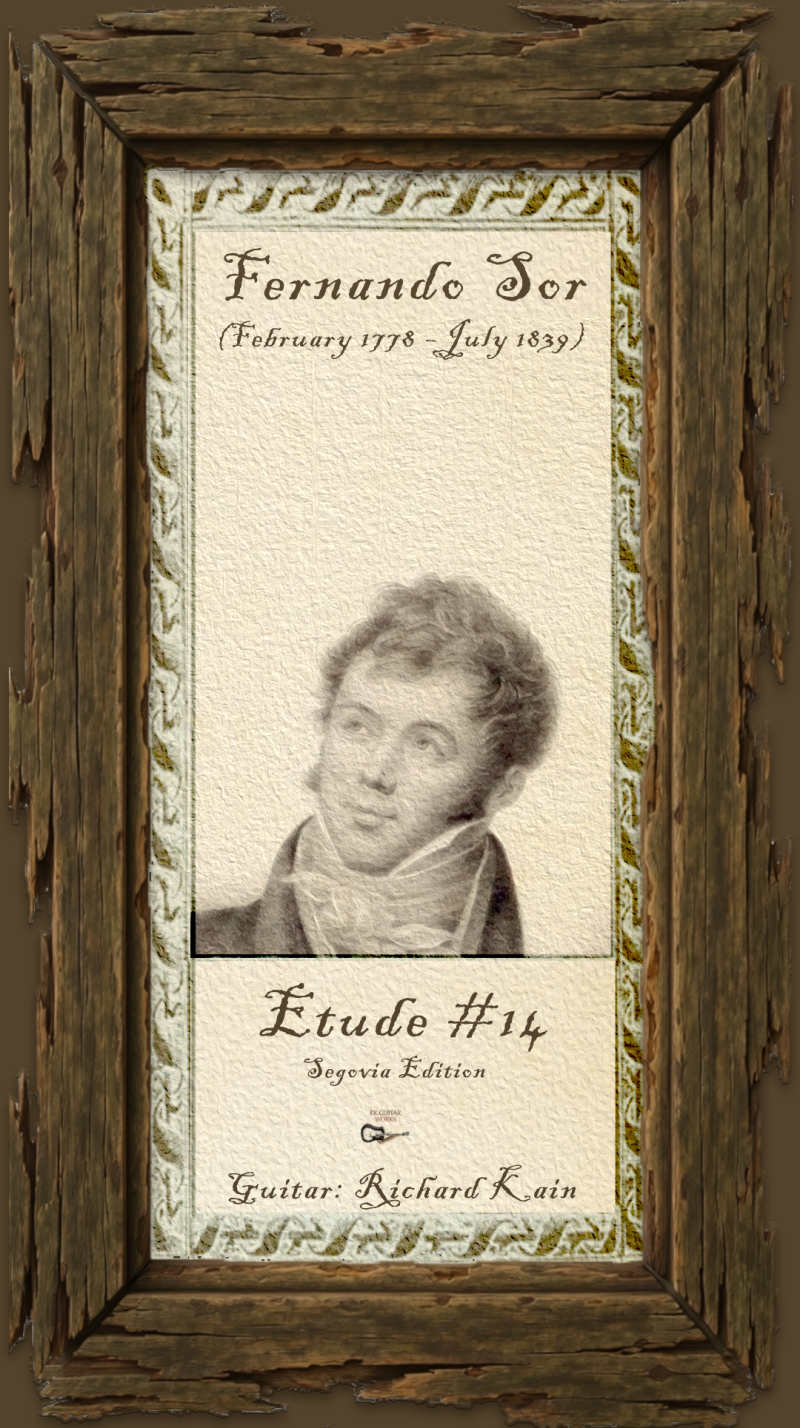
Image is of my design for the soon to be released my recordings of 2 etudes composed by Fernando Sor. The "Beethoven" of the guitar.
Fernando Sor was a composer and guitarist who lived from 1778-1839. He was born in Barcelona and gained much of his early musical education at the monastery at Monserrat. The time period in which he lived was called the Classical era and contains many composers, which are quite familiar today. Musical figures like Mozart and Beethoven were some of the biggest and well-known contemporaries of Sor.
Sor is one of the few guitarists responsible for the development of modern guitar technique. He is often regarded as the most important figure in the history of the guitar. This is evident in his lasting appeal in both discussions and performances on the classical guitar. Many of his most celebrated works are virtuosic in nature, but it may be his didactic, or instructional works, that are some of the most studied and performed. His etudes, also called studies, have built the backbone of classical guitar instruction and offer a lifetime of enjoyment and learning.

The "Twenty Studies for the Guitar" (Segovia Edition) is a curated anthology of classical guitar études composed by Fernando Sor (1778–1839) and selected, edited, and fingered by the legendary maestro Andrés Segovia. Published first in 1945, this specific collection has served as an essential artistic and technical cornerstone for intermediate to advanced classical guitarists worldwide. [1, 2, 3, 4]
The Core Concept
- Curated Pedagogical Path: Segovia combed through Sor’s vast catalog of educational works to choose 20 distinct pieces. [1]
- Lyrical Technique: The selected pieces prioritize musicality and phrasing over dry, mechanical finger exercises. [1]
- Editorial Stamp: Segovia imparted his iconic musical philosophy by adding his own phrasing, dynamics, articulations, and meticulous left- and right-hand fingerings. [1, 2, 3]
- A New Standard: Segovia’s compilation popularized these pieces so heavily that classical guitarists still widely refer to them by their "Segovia Number" (e.g., "Segovia Study No. 1") rather than Sor's original catalog numbers. [1]
The Technical Focus
Each study addresses a different facet of classical guitar mechanics: [1, 2]
- Tone Control: Learning to balance melody lines against accompaniment.
- Finger Independence: Strengthening both left-hand stretches and complex right-hand plucking patterns.
- Endurance & Execution: Developing proper form for maintaining barre chords and smooth position shifts. [1, 2, 3]
Publication History and Variations
- The Compilation Origin: Historical analyses by publishers like Tecla Editions indicate that Segovia likely didn't source the music directly from Sor’s primary manuscripts. Instead, he utilized a 19th-century collection of 24 pieces compiled by Sor’s prominent student, Napoléon Coste, adapting those frameworks for his 20-study edition. [1]
- Mismatched Nomenclature: Though Segovia labeled them all as "Studies," Sor originally cataloged some of these pieces as "Lessons" (Leçons) or "Exercises" (Exercices) across Opuses 6, 29, 31, 35, and 60. [1, 2]
- Modern Print Editions: The text remains a staple in the catalog of Hal Leonard Corporation. Modern editions, such as those distributed by Strings By Mail or London Guitar Studio, frequently include digital audio access featuring demonstration tracks to help players grasp correct tempos and styling
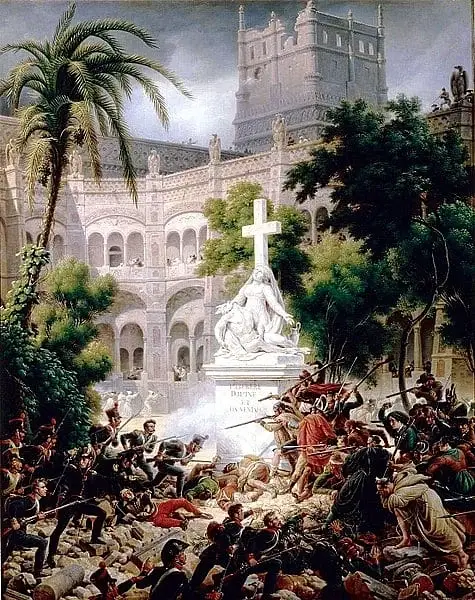
In 1808, when Napoleon Bonaparte invaded Spain, Sor began to write nationalistic music for the guitar, often accompanied by patriotic lyrics. Sor was even part of traveling military bands that would play protest music on the streets. He was also promoted to captain in Córdoba and may have fought battles against the French at this time. After the defeat of the Spanish army, however, Sor accepted an administrative post in the occupying government. Here he was to be officially labeled an afrancesado along with the other Spaniards who abandoned their defense of Spain to embrace the French Revolutionary ideas. After the Spanish repelled the French in 1813, Sor and other afrancesados left Spain for fear of retribution. He went to Paris, never to return to his home country again.[6]